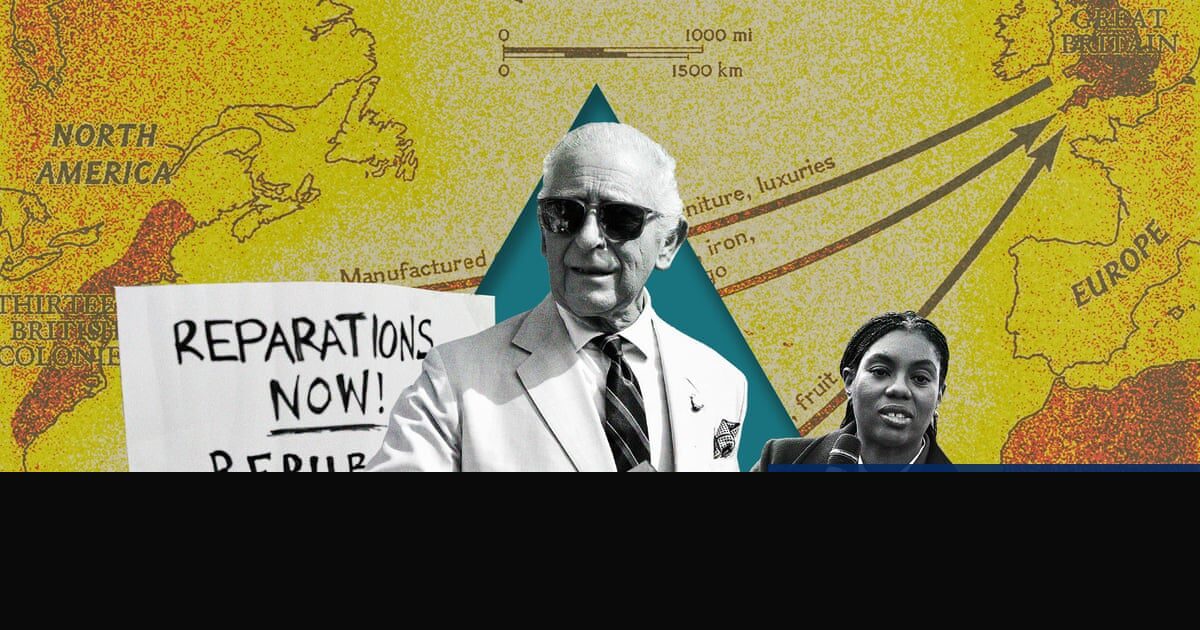
As reparations hover over the Commonwealth summit, Kemi Badenoch's call for African apologies reopens a painful debate about who owed what.
For Caribbean and African nations still living with the fallout of enslavement, reparations are a live question of justice, and cross-diasporic solidarity is driving the push. Now UK Conservative leader Kemi Badenoch has thrown a grenade into the conversation, arguing that African countries should be the ones saying sorry.

The row lands as the Commonwealth summit, attended by King Charles and the UK prime minister, gets underway. Reports suggest British officials tried to keep reparations off the formal agenda, but the topic refuses to stay quiet. After months of growing pressure on the monarchy and politicians to formally apologise for Britain's role in the transatlantic slave trade, Badenoch posted on X that we should be "honest about the whole history." She asked whether Caribbean nations demanding a British apology would also seek one from the descendants of African kingdoms, rulers and merchants who captured, sold and profited from the trade.
Critics call it textbook whataboutery, a way to dodge accountability by pointing elsewhere. Still, it taps into a real and long-running tension in Black communities about African involvement in the trade. Historians broadly agree that some African rulers and traders did take part. They also stress that European powers created the demand, financed the voyages, built the plantation economies and wrote the laws that turned people into property, all on an industrial scale.

That is the context the debate keeps losing. Acknowledging that African elites played a role is not the same as sharing equal responsibility with the states and companies that ran and profited from the system for centuries. Reparations campaigners are asking for accountability from the institutions that built wealth on enslavement, and for repair of damage that still shapes the Caribbean and Africa today.
Expect this argument to follow the summit well beyond the conference room. Whether leaders like it or not, the history is on the table, and the diaspora is not letting anyone close the book.