
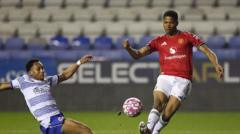
The Nigerian-heritage striker's first-team drought raises questions about his pathway at Old Trafford after a promising debut season.
Chido Obi-Martin's Manchester United story took an intriguing turn this season. After catching eyes with eight senior appearances last campaign, the teenage sensation has found himself absent from Erik ten Hag's first-team plans entirely. For a player who generated significant buzz following his move from Arsenal's academy, the silence has been deafening.
The 16-year-old striker, who represents Denmark internationally but carries Nigerian heritage, made headlines not just for his goal-scoring prowess but for his physical presence that belies his age. Standing tall and clinical in front of goal, Obi-Martin embodied the new generation of African diaspora talents making waves across European football's biggest stages.
Yet football development rarely follows a straight line, especially for teenage prospects navigating the pressure cooker of elite clubs. United's coaching staff appears focused on ensuring Obi-Martin's long-term growth rather than rushing him into senior action. The youngster continues training with various squad levels, honing his craft away from the spotlight that initially surrounded his arrival.
This patient approach mirrors successful development stories across African football, where sustainable growth often trumps immediate gratification. With United's commitment to youth development and Obi-Martin's undeniable talent, this quiet period could well be the foundation for a breakthrough that puts him back in the headlines for all the right reasons.


