
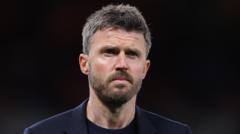
The caretaker boss has delivered results, but underlying issues suggest United's search for permanence continues.
Michael Carrick has quietly assembled the Premier League's best points tally since stepping into Manchester United's hot seat as caretaker manager, yet the numbers tell only part of the story. While the former midfielder has steadied the ship following Ole Gunnar Solskjaer's departure, deeper statistical analysis reveals persistent weaknesses that could derail any permanent appointment hopes.
The Red Devils have shown improved defensive solidity under Carrick's guidance, but their attacking patterns remain predictable and overly reliant on individual brilliance. This concern becomes more pronounced when considering United's squad depth, which includes promising talents like Ivorian defender Eric Bailly, whose injury struggles have limited his impact this season.
Carrick's temporary tenure coincides with a broader transformation across European football, where African coaches and players continue to reshape the game's landscape. From Riyad Mahrez's title-winning exploits to the emergence of young stars across the continent, the sport's center of gravity keeps shifting.
While United's board weighs their options, Carrick's statistical success masks fundamental tactical questions that any long-term appointment must address. The club's next permanent manager will inherit a squad capable of brilliance but lacking the consistency demanded at Old Trafford's elite level.


