
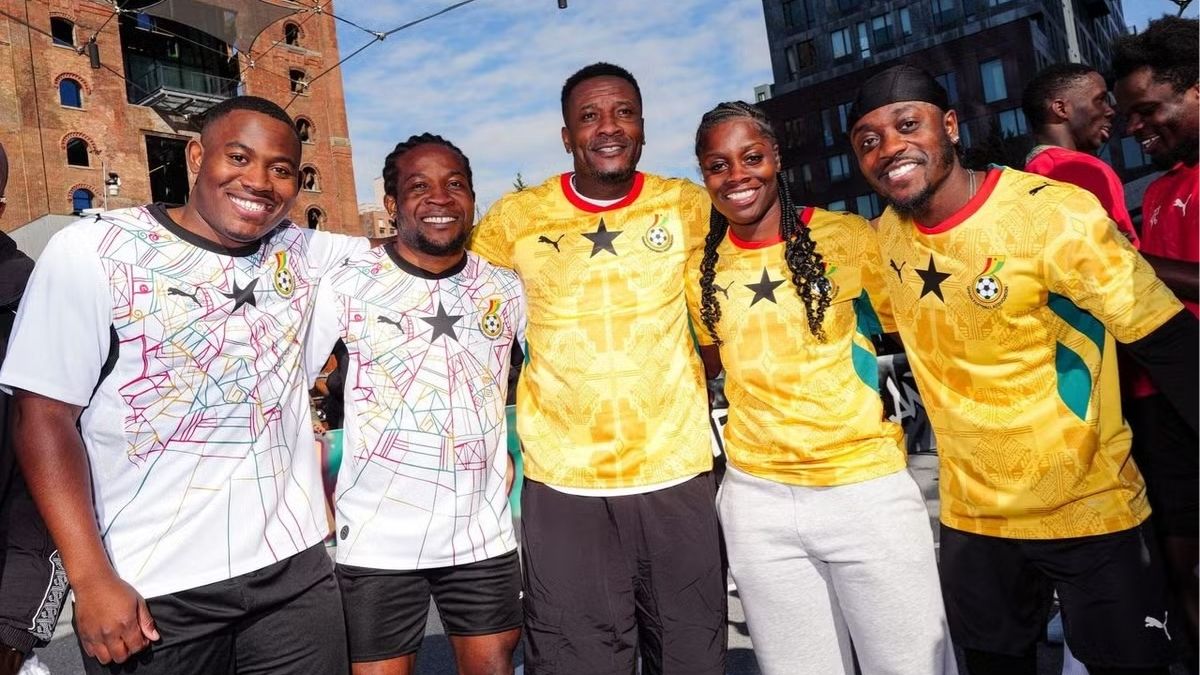
Asamoah Gyan, Black Sherif and Freda Ayisi lead a celebration of Ghanaian culture, music and football as the home and away strips go public for the first time
Ghana's 2026 FIFA World Cup kits are finally here, and Puma made sure the world noticed.
The German sportswear giant unveiled its new national team kits for 11 nations on Thursday, March 20th, with a street-level event at Domino Square in Brooklyn, New York, that placed football, music, food, and culture at centre stage.
Brooklyn comes alive
Rather than launching in a stadium setting or through a cinematic brand film, Puma chose to reveal the kits in play, first worn by local community members from each nation on the streets of New York.
The Brooklyn bash exploded into a festival atmosphere with a 4v4 football tournament, live music performances, and interactive fan zones, with viral moments capturing crowds grooving to the trending 'Kakalika' dance.
Football legend and Ghana's all-time leading scorer Asamoah Gyan took centre stage, officially representing the Black Stars at the event. He was joined by an elite roster of international football icons, including Portugal's Ricardo Quaresma and Senegal's El Hadji Diouf.
The atmosphere was further electrified by a live performance from Ghanaian music sensation Black Sherif, who appeared alongside Black Queens forward Freda Ayisi to celebrate the intersection of African sport and global lifestyle.
The decision to launch the kit in New York reflects Ghana's expanding international appeal, especially ahead of the 2026 FIFA World Cup, which will be hosted across the United States, Canada and Mexico.
The event, centred around a series of custom-designed trucks, each represented one of Puma's 11 nations through visual identity, local food, music, and cultural artefacts.
The home kit: Football meets folklore
The white home jersey is the centrepiece of the collection. Puma describes it as a design where football and folklore come together, with a bold graphic drawn from the legends surrounding Kente, Ghana's iconic woven cloth, bringing a sense of heritage into the modern game.
The replica jersey pairs the same match-worn look with a casual silhouette, ideal for both game day and everyday wear.
Designed under the creative direction of renowned Ghanaian artist Prince Gyasi, the collection merges high-performance sportswear with deep-rooted cultural aesthetics, with the home jersey featuring a striking white and gold-yellow palette accented with intricate Adinkra symbols.
Through layered lines and bold colour accents, the design translates heritage into a modern visual language, allowing the home kit to honour Ghana's cultural roots while projecting innovation and movement suited to the global football stage.
The away kit: Makola in Sunny Yellow
The away kit draws from a very different but equally vivid source of inspiration, Accra's Makola Market. Puma describes it as vibrant, alive, and impossible to ignore in a striking Sunny Yellow colourway, with the replica jersey again pairing the same match-worn look with a casual silhouette and materials ideal for both matchday and everyday use.
The design showcases a rich blend of yellow shades that lean closer to gold rather than familiar tones seen in recent editions, signalling a noticeable shift from previous away strips worn by the Black Stars and offering something fresh for a tournament that marks Ghana's fifth World Cup appearance.
The full 2026 collection goes on sale from March 24th and features Puma's ULTRAWEAVE technology and dryCELL fabric across all jerseys, while replica kits are produced using Puma's RE:FIBRE initiative as part of the brand's commitment to responsible product innovation.
Ghana are expected to debut the new strips in their upcoming international friendlies, with the Black Stars set to face Austria in Vienna next Friday, March 27th, before travelling to Stuttgart to take on Germany three days later on March 30th.
A nation divided
Not everyone has been won over. The reaction among Ghanaian fans since the kits went public has been sharply mixed. While some have praised the concept for drawing from indigenous Ghanaian culture, others have criticised the execution, describing elements of the design as confusing, unattractive, or disconnected from the national identity many associate with the Black Stars.
On social media, several users questioned whether the Ananse and Kente symbolism was necessary or properly communicated, arguing that national team jerseys should project simplicity, pride and visual strength rather than abstracted cultural references.
However, supporters of the jersey have defended Puma's approach, saying it represents a bold attempt to tell a Ghanaian story on the global stage, arguing that Kwaku Ananse is a powerful cultural symbol whose use highlights Ghana's rich oral traditions and intellectual heritage.
The debate, passionate as it is, reflects just how deeply football, culture and national identity are intertwined in Ghana.
Two decades of Puma and the Black Stars
The unveiling also marks another chapter in one of African football's most enduring kit partnerships. The Black Stars have been kitted by Puma for 19 years, with Ghana first wearing the brand at the 2006 World Cup in Germany, their debut appearance at the tournament.
Since that famous first campaign, Puma has produced every Black Stars kit across four World Cup tournaments, the Africa Cup of Nations, and countless qualifying campaigns.
Throughout that time, the partnership has evolved beyond simply providing jerseys. GFA President Kurt Okraku visited Puma's headquarters for a strategic meeting with executives to discuss how the sponsorship could support youth football development in Ghana.


